
Frieze New York 2026: Reading the Future of Contemporary Collecting
Strong sales, institutional acquisitions, and a more geographically expansive art world suggest a contemporary market that is becoming more global, more interconnected—and increasingly discerning.

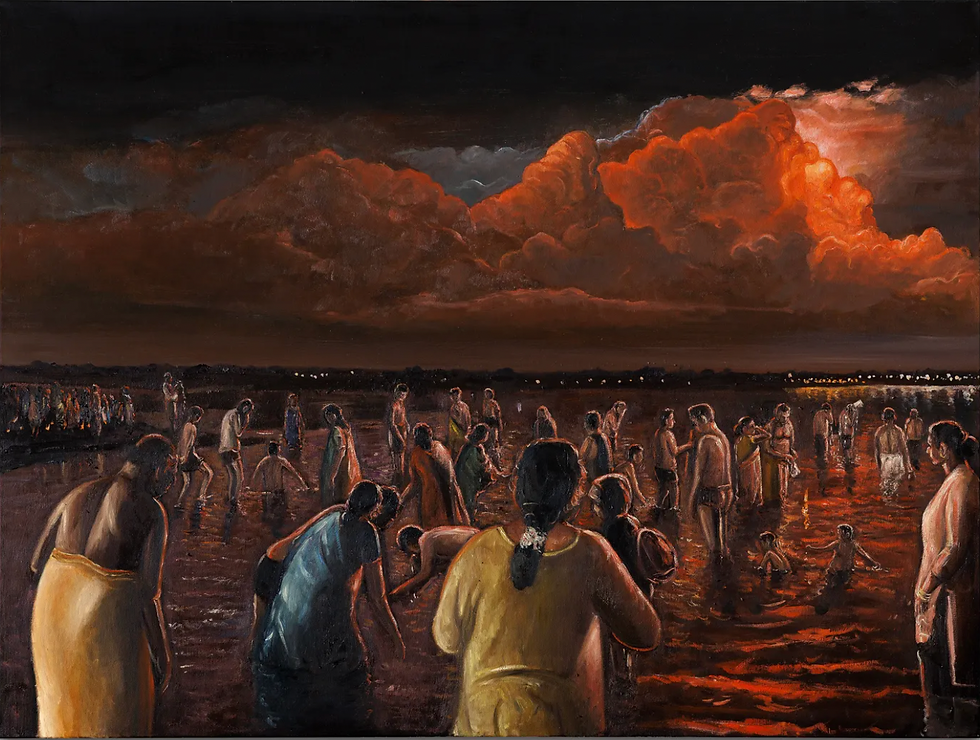
Georg Baselitz
Stunde der Nachtigall, 2012
India ink, watercolor and ink on paper
99.7 x 69.9 cm (39.25 x 27.52 in)
Every May, New York becomes a concentrated portrait of the international art world. Galleries unveil new exhibitions, museums open their doors to a new season of programming, collectors move between private viewings and fair stands, and artists, curators, advisors, writers, and institutions converge across the city.
At the center of this activity, Frieze New York 2026 offered more than a snapshot of the contemporary art market. It offered a series of signals about where the field may be heading.
The 15th edition of the fair closed at The Shed on May 17, bringing together 68 galleries from 26 countries and welcoming approximately 25,000 visitors from 75 countries over five days. According to Frieze's official post-fair report, exhibitors described strong demand from private collectors, institutions, and foundations, with significant placements across the market—from seven-figure works to $4,000 pieces by emerging artists. The fair also recorded substantial institutional acquisitions, including works entering the collections of the Brooklyn Museum and the Baltimore Museum of Art.
But the more interesting story was not simply what sold.
It was who was being collected, where those artists came from, how institutions were participating in the process, and what kinds of practices were beginning to command serious attention.
From an ArtAccess perspective, Frieze 2026 suggested a contemporary art ecosystem that is becoming increasingly global and institutionally interconnected, while remaining highly selective. The fair demonstrated that collectors continue to commit significant capital to established artists, while also showing considerable appetite for practices whose market positions are still developing.
For collectors, the most interesting question coming out of Frieze New York is not who was the most expensive artist at the fair. It is which artists are beginning to acquire the conditions of lasting significance.
The Market Is Still Spending—But Selectively
The strongest sales at Frieze New York 2026 demonstrated that appetite for significant contemporary art remains substantial.
On the opening day, White Cube reported selling two major works by El Anatsui: LuwVor I (2025) for $2.2 million and MivEvi III (2025) for $1.9 million. The gallery also placed Antony Gormley's SET VII (2024) for £450,000, Howardena Pindell's Deep Space #4 (2025) for $275,000, and Marina Rheingantz's Salvador (2026) for $250,000.
The upper end of the fair remained active elsewhere. Thaddaeus Ropac reported the sale of Georg Baselitz's Stunde der Nachtigall (2012) for €1.4 million, Robert Rauschenberg's Bob Song (Salvage) (1984) for $825,000, and Alex Katz's Black Roses 3 (2025) for $600,000. Almine Rech placed a major James Turrell light work in the range of $900,000 to $1 million, while Hales sold the centerpiece of its solo presentation by Virginia Jaramillo for $540,000.

Alex Katz
Black Roses 3, 2025
Oil on linen
152.9 × 91.6 cm (60.2 × 36.06 in)
The strength of established contemporary practices was also visible at Pace Gallery, which reported numerous sales from its dual presentation of Maya Lin and Leo Villareal in the $100,000–$200,000 range. At 303 Gallery, Doug Aitken's Terra sold for $225,000, alongside significant sales by Rob Pruitt, Sam Falls, Sue Williams, and Jeppe Hein.
Yet the fair's commercial picture extended well beyond its highest-value transactions.
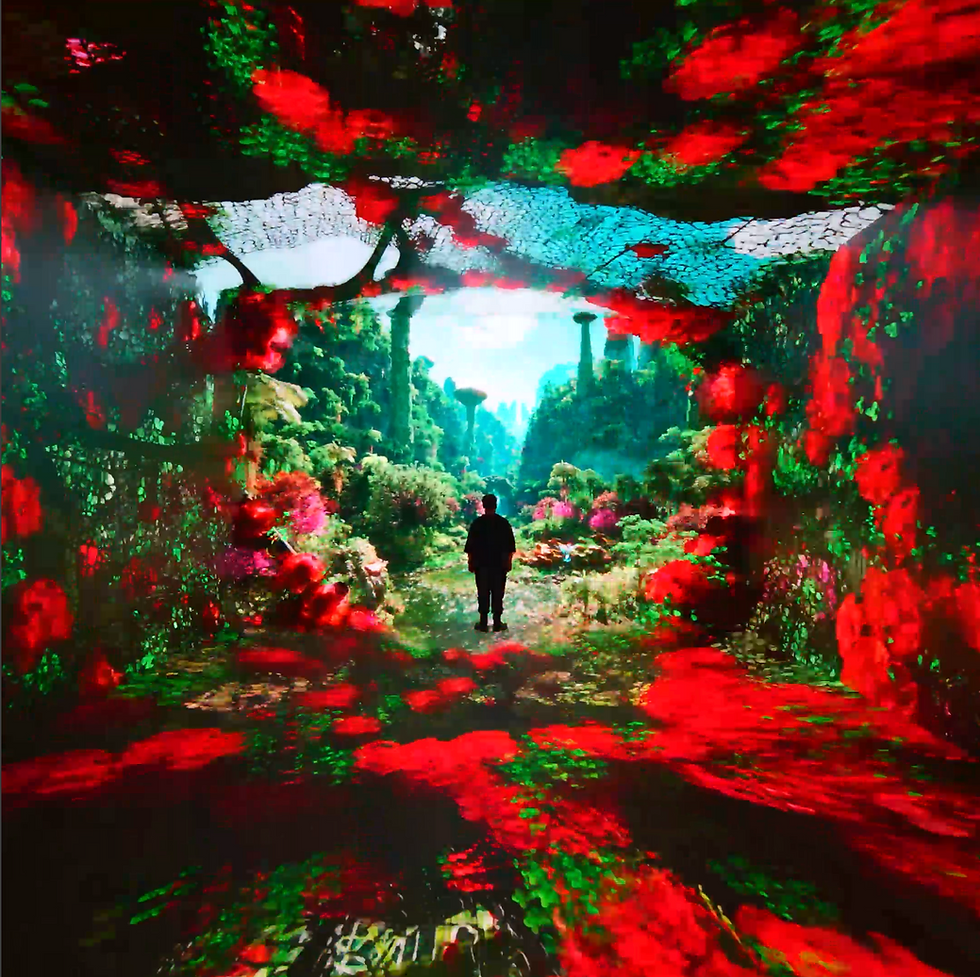
James Cohan reported selling out its booth, placing all eight paintings from its solo presentation of Kelly Sinnapah Mary, with The Sacred Garden (2026) leading at $130,000 and additional works priced from $20,000 to $95,000. Night Gallery sold seven paintings by Hayley Barker priced between $30,000 and $175,000. The joint presentation by Almeida & Dale and François Ghebaly nearly sold out, including a work by Jaider Esbell for $180,000, a painting by Amadeo Luciano Lorenzato for $115,000, and a Tony Matelli for $90,000. Nara Roesler sold Marcelo Silveira's Seeds VII (2025–26) for $45,000 and placed five works by Jonathas de Andrade between $12,000 and $22,000. Frieze's own reporting therefore presents a market with considerable breadth: from multimillion-dollar works by internationally established artists to emerging practices available at four- and five-figure price points.
From an ArtAccess perspective, the more interesting takeaway is not that collectors are abandoning established names for emerging artists—or vice versa. Rather, the 2026 results suggest that conviction is operating at multiple levels of the market. A collector may commit $2.2 million to a major El Anatsui, $540,000 to a significant Virginia Jaramillo, $130,000 to a Kelly Sinnapah Mary, or $45,000 to a Marcelo Silveira. The scale of the acquisition changes, but the underlying question remains similar:
Is this a work that deserves to hold a place in the collection?
That is a more useful framework than simply dividing the market into "blue-chip" and "emerging."
The Market Signal Is Not the Same as the Art-Historical Signal
This distinction is increasingly important. A strong fair sale tells us that collectors are responding to a work at a particular moment. It does not, by itself, establish long-term art-historical importance. Conversely, an artist's institutional recognition may signal critical significance without immediately translating into high prices. The most compelling situations, in our view, occur when several forms of recognition begin to converge: serious gallery representation, curatorial attention, institutional interest, a coherent body of work, and sustained collector demand.
Frieze New York 2026 offered several examples of this convergence, though each should be understood on its own terms. The fair's Focus section was particularly revealing. Curated for the third consecutive year by Lumi Tan and dedicated to galleries founded within the last 12 years, Focus created a platform for younger galleries and the artists they represent. Frieze reported strong institutional engagement with the section, including museum acquisitions and curatorial attention.
This year, Focus became more closely connected to institutional collecting through the inaugural Sherman Family Foundation Acquisition Fund. The five-year initiative provides $50,000 annually to acquire works from the section, while also giving each selected artist a $5,000 unrestricted award. In its first year, the fund supported acquisitions for the Baltimore Museum of Art and the Brooklyn Museum.
The Baltimore Museum of Art acquired works by Reika Takebayashi, Seba Calfuqueo, and Joanne Burke, while the Brooklyn Museum acquired two works by Bettina from Ulrik. The fund also provided direct artist support, including a posthumous award supporting the documentation and preservation of Bettina's work. Seba Calfuqueo's presentation by Buenos Aires-based W-Galería also received the 2026 Focus Stand Prize.
These are not simply commercial results. They demonstrate a direct connection between a fair platform designed to highlight younger galleries and the public institutions that are actively shaping the historical record of contemporary art.
For collectors, this creates a useful signal—but not a shortcut.
Museum acquisition should never be treated as a guarantee of future market performance. Nor should fair visibility be confused with lasting importance. But when an artist's work begins to attract attention from galleries, curators, collectors, and museums simultaneously, the convergence itself becomes worth studying.
The question is not simply whether an artist has been "discovered."
It is whether the artist's work is beginning to generate a convergence of serious attention.
Focus and the New Economics of Discovery
The traditional model of collecting emerging art has often been based on identifying artists early, before prices rise and before institutional recognition becomes widespread.
But the contemporary market is making this process more complicated.
Collectors now have access to an extraordinary amount of information. Artists can gain visibility through social media, digital platforms, fairs, online viewing rooms, and institutional programs. As a result, simply being "early" is no longer, by itself, a particularly sophisticated collecting strategy. The more important question is whether an artist has the foundations of a durable career. Frieze's Focus section offers one framework for considering this distinction. Its emphasis on younger galleries and solo presentations gives collectors an opportunity to encounter artists before their market positions are fully established.
In 2026, the section also demonstrated an unusually direct connection between discovery and institutional validation through the Sherman Family Foundation Acquisition Fund. For a collector, this changes the nature of research. Discovering an artist before consensus forms requires more than familiarity with the traditional gallery circuit. It requires looking at exhibition history, gallery relationships, institutional support, critical reception, and the intellectual coherence of an artist's practice.
The goal should not be to identify the next million-dollar artist. The goal should be to recognize an artist whose work deserves to matter—even if the market has not yet decided how much it is worth.
That distinction is at the heart of informed collecting.
Latin America: From Representation to Recognition
One of the clearest geographic signals from Frieze New York 2026 was the strength of Latin American representation. Frieze highlighted 14 galleries from across the region and reported a strong response to Latin American galleries and artists. The fair positioned this presence as part of its broader international perspective, rather than as a separate regional category. The significance, however, extends beyond the number of galleries present.
For years, Latin American art has often been treated by the international market as a distinct category—important, but somehow separate from the central narrative of contemporary art. The 2026 edition offered another indication that this framework is becoming increasingly inadequate. The sales themselves reflected this breadth.
Nara Roesler placed works by Marcelo Silveira and Jonathas de Andrade, while the joint presentation by Almeida & Dale and François Ghebaly nearly sold out, including works by Jaider Esbell, Amadeo Luciano Lorenzato, Tony Matelli, Melike Kara, and Patricia Iglesias Peco. These results do not, by themselves, prove a wholesale shift in the global market. But they do offer a meaningful snapshot of an art ecosystem in which artists from Latin America are increasingly visible across different price levels and different stages of institutional recognition.
The deeper point is not simply that more Latin American artists are appearing at an international fair. It is that the geography of contemporary art is becoming harder to separate from the broader story of contemporary art itself. For collectors, the opportunity lies in looking beyond the broad category of "Latin American art" and understanding the specific cultural and intellectual contexts behind individual practices.
The question should not simply be whether an artist comes from an emerging collecting geography. It should be:
What does this artist see, understand, or articulate that the dominant art-world narrative has previously overlooked?
That is where geographic expansion becomes genuinely meaningful.
The Institutional Ecosystem Is Becoming More Visible
Another important feature of Frieze New York 2026 was the relationship between the fair and New York's wider cultural institutions. The fair did not exist in isolation. Its broader program extended across The Shed, the Whitney Museum of American Art, and Dia Art Foundation, with collaborations involving artists including Jonathan González and David Lamelas. A new commission by Oglála Lakȟóta artist Kite was presented in partnership with Counterpublic.
This wider ecosystem is significant because contemporary artists increasingly move between commercial and institutional contexts. An artist may first be championed by a young gallery, appear in a curated fair section, attract curatorial attention, enter a museum collection, and later participate in a biennial or major institutional exhibition.
The progression is rarely linear, and none of these steps guarantees long-term significance. But the accumulation of attention can be meaningful. For collectors, this suggests a new form of due diligence.
The question is no longer simply, "Who is buying this artist?" It is also, "Who is paying attention to this artist—and why?"
Market attention can be temporary. Institutional and critical attention, when sustained over time, may offer a different indication of an artist's position within the broader cultural landscape.
Established Artists, Emerging Practices
One of the strengths of Frieze New York 2026 was that it did not force collectors to choose between established contemporary practices and emerging voices.
The fair accommodated both.
Pace Gallery's presentation of Maya Lin and Leo Villareal, for example, generated numerous sales in the $100,000–$200,000 range, demonstrating continued demand for artists whose careers are firmly established but whose practices remain relevant to contemporary collecting.
At the same time, the fair's Focus section and the sales of artists such as Kelly Sinnapah Mary, Akinsanya Kambon, Seba Calfuqueo, Reika Takebayashi, and others illustrated the willingness of collectors and institutions to engage with practices at earlier stages of market development.
This coexistence may be one of the most useful lessons for private collectors.
A collection does not need to be constructed around a single market strategy. It can contain artists whose historical positions are already secure alongside artists whose significance is still unfolding.
In fact, the dialogue between those two groups can make a collection more intellectually interesting.
The challenge is to understand what each work contributes.
An established artist may bring historical continuity and a recognized position within contemporary art. A younger artist may introduce a new formal language, a different cultural perspective, or an unresolved question.
The strongest collections often make room for both certainty and discovery.
Beyond New York: The Geography of Contemporary Art Is Changing
New York remains one of the world's most important centers for contemporary art. Its concentration of museums, galleries, collectors, advisors, foundations, and cultural institutions makes it uniquely powerful. But Frieze New York 2026 also demonstrated how many of the ideas entering New York increasingly originate elsewhere.
Buenos Aires. Mexico City. São Paulo. Santiago. The fair's participation by galleries from across Latin America, alongside artists working in different cultural and geographic contexts, suggests a contemporary art landscape that cannot be understood solely through its traditional centers. Frieze itself emphasized the strength of the region's representation, with 14 galleries from Latin America participating in the 2026 edition.
This does not mean that geography itself determines artistic importance. Rather, geography can provide context. An artist's location may shape their relationship to history, politics, ecology, language, and identity. Understanding those contexts can deepen a collector's understanding of the work itself. For collectors, geographic literacy is therefore becoming another form of connoisseurship. The collector who knows only the established centers of the market may have access to excellent art. But the collector who understands how cultural production is evolving across different regions may have access to something else:
Perspective.
What Should Collectors Take Away from Frieze 2026?
The most important lesson from this year's fair may be that contemporary collecting is becoming simultaneously more global and more selective. The fair's sales demonstrate that collectors continue to commit significant sums to established artists. At the same time, strong presentations by younger artists and galleries indicate meaningful appetite for discovery.
Institutional acquisitions are adding another layer of visibility, but they should not be mistaken for guarantees of market performance. The growing presence of Latin American galleries and artists is significant, but it should be understood as part of a broader expansion of the contemporary art ecosystem rather than evidence of a single, uniform market trend.
From an ArtAccess perspective, the most compelling opportunities are often found where several qualities intersect:
A distinctive artistic language. A coherent and developing body of work. Strong gallery representation. Growing institutional attention. Meaningful critical engagement. And a market that has not yet fully priced in the artist's significance.
None of these factors guarantees future success. But together, they can provide a more sophisticated framework for thinking about an acquisition.
The ArtAccess Perspective
At ArtAccess, we believe that the most rewarding collections are built through curiosity, research, and conviction—not prediction. Frieze New York 2026 reinforced that principle.
The contemporary art market is changing rapidly, but the fundamentals of thoughtful collecting remain remarkably consistent. The best collectors are not necessarily those who identify the next market sensation first. They are those who develop the ability to distinguish between visibility and significance, between momentum and substance, and between an artist who is simply fashionable and one whose work may ultimately become important.
The 2026 edition also demonstrated the value of looking beyond the most familiar market centers. The collector of tomorrow will need to follow artists across institutional and commercial contexts, understand the cultural histories that inform their practices, and recognize that museum acquisition, curatorial attention, and gallery conviction can sometimes be as revealing as a price at auction.
The future of collecting belongs to those who can read both the market and the culture that produces it.
Frieze New York 2026 did not provide a definitive answer to what the future of contemporary art will look like, but it offered something perhaps more valuable: a series of signals.
The expansion of the geographic field. The growing relationship between fairs and institutions. The strength of focused presentations. The willingness of collectors to support artists at different stages of their careers. And, above all, the continued importance of judgment. For the serious collector, these signals are worth following. Because the most interesting moment to begin paying attention to an artist is rarely when everyone already agrees on their importance. It is earlier—when the evidence is beginning to accumulate, the work is strong, the conversation is expanding, and the market has not yet reached consensus. That is where collecting becomes most intellectually rewarding. And, occasionally, where it becomes most consequential.

Comments